Case Study
Lockmeadow Footbridge
- cable stayed aluminium footbridge
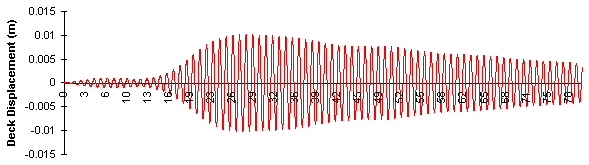
- response time history analysis
- comparison with design codes
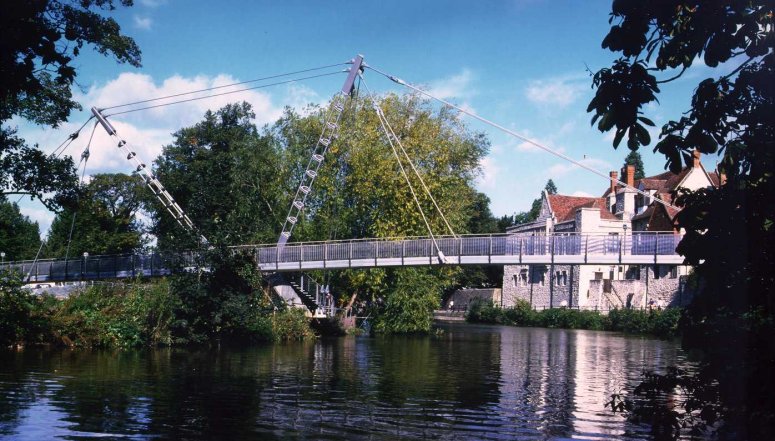
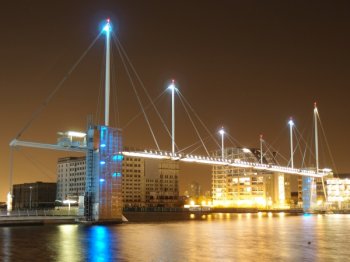
This innovative, cable stayed,
aluminium bridge spans the River Medway in Maidstone, Kent and was the winning entry in a
design competition. Designed by Flint and Neill in conjunction with Wilkinson Eyre Architects, the slender aluminium deck
system and the inclined skeletal steel masts combine to achieve a lightness which
minimises the visual impact on the important historical buildings adjacent to the site.
Situated in what has been described as one of the most
environmentally and historically sensitive locations for a bridge in the UK, this site
demanded an elegant response to the problem of crossing the River Medway and its flood
plain. FNP’s winning design adopts an innovative cable stayed aluminium deck to
maximise the slenderness and transparency of the bridge which is 80m long and also
features twin skeletal steel masts. The parapets are made of carbon fibre and stainless
steel, and the whole bridge is designed to minimise long term maintenance requirements.
The aluminium deck is made up of extruded sections prestressed together for easy assembly,
without the need for any added secondary structure or finishes.
Flinit & Neill is regularly involved in projects involving advanced analytical
techniques to solve complex engineering problems, and has developed many of its own
specialist computer programs to meet these needs. However, for the Lockmeadow Footbridge
project, FNP used LUSAS Bridge to perform a number of response time history
analyses in order to predict the dynamic response of the deck when subjected to the moving
loads of UK design code BD 37/88.
Flint
and Neill Partnership is committed to being in the forefront of developments in bridge
technology worldwide. It is actively involved in advancing computational methods of
analysis, using software such as LUSAS, as well as leading the way in other aspects such
as aerodynamics, risk assessment, materials technology and construction techniques; all
the time ensuring that any innovations they pursue are firmly based on established and
proven engineering principles and practice. 
Find out more
Other LUSAS Bridge case studies:
|