|
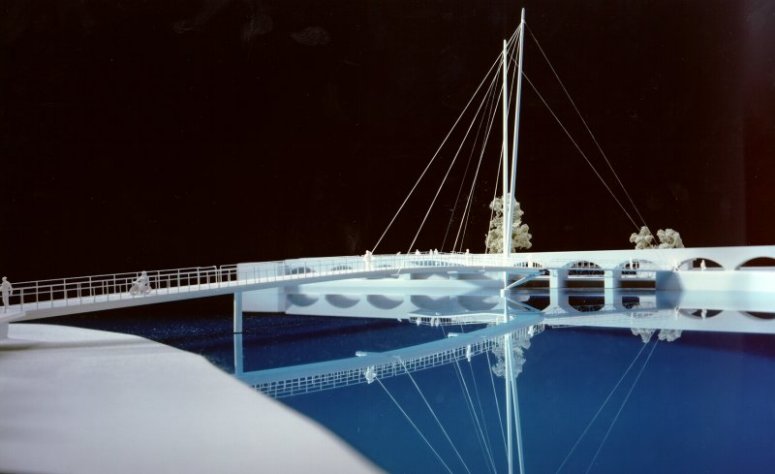
A three 'legged' structure, the bridge connects to two levels on the
south side of the river. The main steel trapezoidal box girder deck curves around the 40m
high tubular steel masts to meet an old Victorian railway viaduct and the aluminium
gangway structure connects to the historic quayside. The bridge has a main span is 64
metres and a total length of structure of 140 metres.
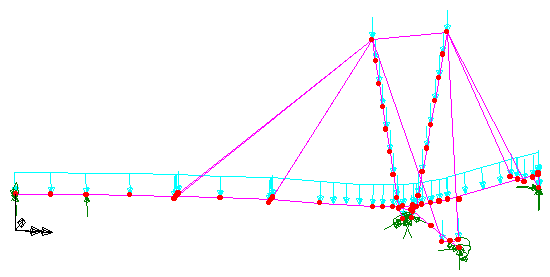
3D static and dynamic analysis using LUSAS Bridge analysis software helped
develop and prove the design. Bar and thick beam elements modelled the various structural
members. Forces and moments were extracted from the beam elements and converted to give
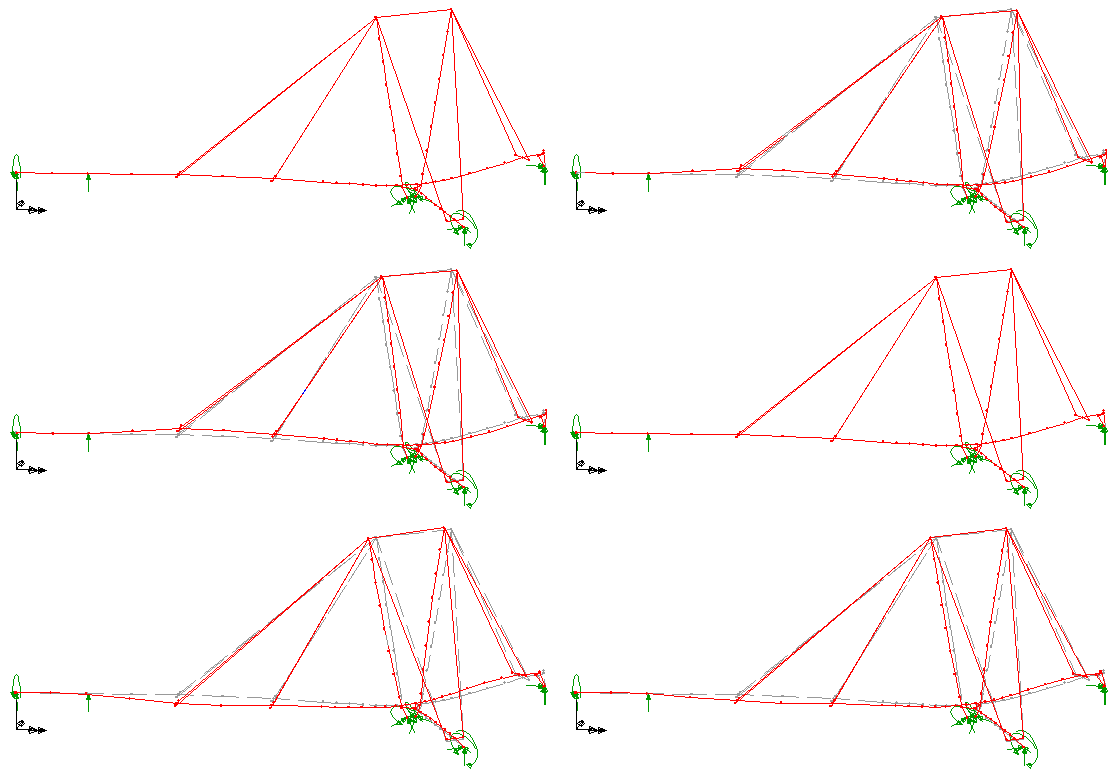
stresses in the plates to allow design to BS5400 Part 3. Eigenvalue extraction was used to
check the suitability of the bridge with respect to wind and pedestrian excitation.
As well as performing global analyses of the structure a local model of the top
of the mast was created using thin shell elements. Stresses caused by the
six cables being
attached to this region were obtained and used to further validate the design.
Steven Boyd, the Project Engineer on the crossing said, 'We find LUSAS
to be a very useful design tool. We have confidence in the accuracy of the results that
are obtained and good technical product support is available should we ever need it.'
|